


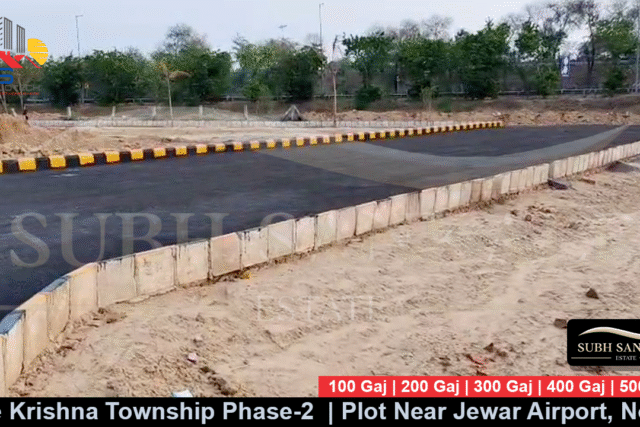
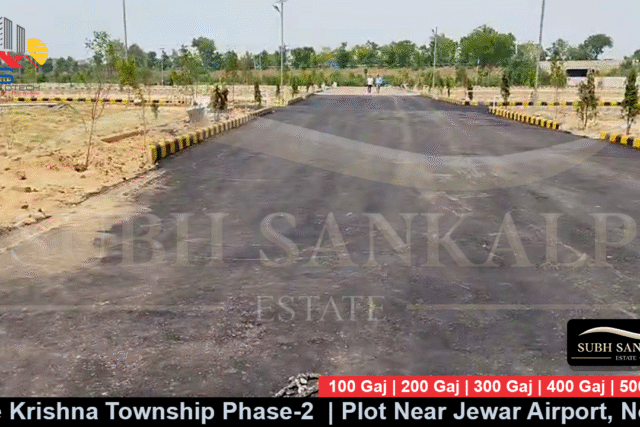
The 800-acre development plan for Gaj Tappal represents a visionary leap in airport-centric urban planning, positioning the area as a future-ready Aviation Megacity that integrates world-class logistics, advanced manufacturing, and sustainable urban development around 800 Gaj Tappal Jewar Airport – Hare Krishna Township Phase 2 at Jewar. This unprecedented scale enables the creation of a self-sufficient economic powerhouse designed to drive India’s growth in the global aviation and logistics sectors for decades to come.
1. The Aviation Megacity Concept
At 800 acres, Gaj Tappal transcends traditional airport development models to embrace the concept of a comprehensive aviation-oriented urban center. This megacity approach recognizes that modern airport ecosystems must function as economic catalysts rather than mere transportation nodes. The scale allows for the creation of a balanced environment where cutting-edge logistics infrastructure coexists with research facilities, manufacturing hubs, and quality urban spaces, all optimized around air connectivity.
2. Strategic Zone Planning and Development
The master plan organizes the vast area into specialized, interconnected districts:
- Global Logistics Gateway (200 acres): Featuring automated cargo terminals capable of handling 5 million tonnes annually, dedicated pharma corridors, and perishable goods centers with blockchain-enabled tracking systems
- Aerospace Industrial Park (250 acres): Housing MRO facilities, aircraft component manufacturing units, and drone technology development centers with direct airside access
- Innovation and R&D Campus (150 acres): Dedicated to logistics technology, supply chain management research, and aviation sciences in partnership with academic institutions
- Urban Core District (200 acres): Including business centers, hospitality zones, residential complexes, and recreational facilities supporting a 24/7 workforce
3. Economic Transformation and Global Positioning
The megacity is projected to create transformative economic impact:
- Employment Generation: Potential to create over 200,000 direct jobs across aviation, logistics, manufacturing, and service sectors
- Export Enhancement: Projected to handle 25% of North India’s air cargo, boosting export competitiveness across multiple industries
- Investment Magnet: Expected to attract $8-10 billion in investments from global logistics firms, aerospace companies, and technology providers
- GDP Contribution: Estimated to contribute 1-1.5% to Uttar Pradesh’s GDP upon full operationalization
4. Next-Generation Infrastructure Systems
The development incorporates futuristic infrastructure elements:
- Smart Utility Grids: AI-managed power, water, and waste systems with 50% renewable energy integration
- Advanced Transportation: Automated guided vehicle networks, dedicated freight corridors, and provisions for urban air mobility infrastructure
- Digital Infrastructure: 5G-enabled IoT ecosystem, cloud computing facilities, and cybersecurity operation centers
- Sustainable Design: Green building standards, water recycling plants, and carbon-neutral operational targets
5. Multi-Modal Integration and Global Connectivity
The scale enables unprecedented connectivity solutions:
- Rail Integration: Direct high-speed freight rail connection to the Dedicated Freight Corridor with customs-cleared express services
- Road Network: Six-lane expressway connection with intelligent traffic management systems
- Airside Efficiency: Automated taxiways, segregated passenger and cargo aircraft movements, and night operation capabilities
- Digital Connectivity: Virtual trade platforms connecting the megacity with global supply chain partners
1. What distinguishes an ‘Aviation Megacity’ from smaller airport developments?
An Aviation Megacity integrates complete urban ecosystems with aviation infrastructure, going beyond cargo handling to include R&D, manufacturing, residential areas, and advanced urban services – all optimized around air connectivity. The 800-acre scale makes this comprehensive integration possible.
2. How will the project address environmental sustainability at this scale?
The plan mandates 20% green cover, net-zero water usage through advanced recycling, 50% renewable energy integration, and electric vehicle-only zones within the megacity. Environmental management will be continuously monitored through smart sensors.
3. What is the projected timeline for this massive development?
The development is envisioned in five phases over 15-20 years, beginning with core logistics infrastructure, followed by manufacturing zones, then urban development, with continuous technology upgrades throughout the project lifecycle.
4. How will this megacity integrate with existing urban areas around Jewar?
The plan includes seamless connectivity infrastructure – high-frequency mass transit systems, elevated corridors, and digital integration – to connect the megacity with surrounding urban centers while managing growth pressures through careful spatial planning.
5. What makes this scale necessary for India’s future aviation needs?
The 800-acre scale accounts for India’s projected position as the world’s third-largest aviation market by 2040. It provides the capacity needed for future technologies like drone logistics, urban air mobility, and automated freight systems while allowing for expansion and adaptation to unforeseen industry developments.

Leave a review for 800 Gaj Tappal Jewar Airport – Hare Krishna Township Phase 2