


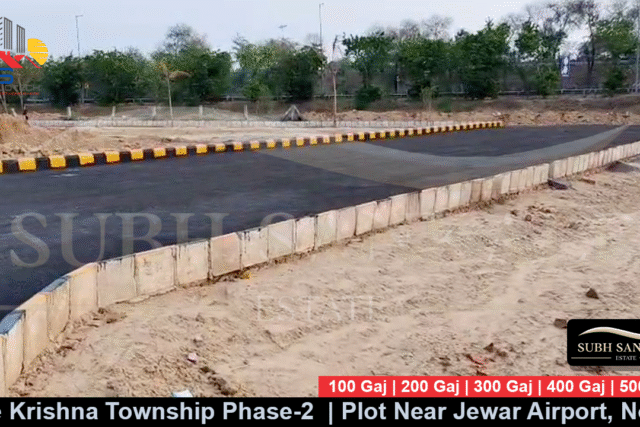
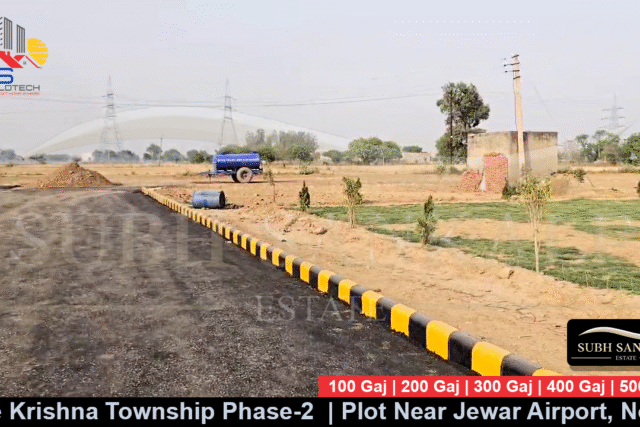
The proposed 700-acre development at Gaj Tappal represents a groundbreaking vision that transcends conventional airport infrastructure, positioning itself as a comprehensive Integrated Economic Zone centered around 700 Gaj Tappal Jewar Airport – Hare Krishna Township Phase 2 at Jewar. This massive scale enables the creation of a self-sustaining economic ecosystem that seamlessly blends advanced logistics, manufacturing, commerce, and urban development into a cohesive growth engine for the Delhi-NCR region and beyond.
1. The Integrated Economic Zone Concept
At 700 acres, Gaj Tappal evolves from a logistics hub into a fully integrated economic zone designed to capitalize on the strategic advantages of airport connectivity. This scale allows for the development of a balanced ecosystem where industrial, commercial, and residential components coexist and complement each other. The zone leverages its proximity to the Western Dedicated Freight Corridor (WDFC) and Yamuna Expressway to create unparalleled connectivity while maintaining operational efficiency across all functions.
2. Comprehensive Zone Development Strategy
The master plan for this expansive area incorporates several specialized zones:
- Advanced Logistics Corridor: A 200-acre dedicated area featuring automated cargo terminals, cold storage facilities, and cross-docking centers directly connected to both the airport tarmac and the WDFC rail terminal
- Manufacturing and Value-Add Park: A 250-acre zone for high-value industries including electronics assembly, pharmaceutical processing, and precision engineering that benefit from immediate air cargo access
- Commercial and Business District: A 150-acre mixed-use development containing corporate offices, exhibition centers, hotel complexes, and retail spaces
- Support Infrastructure Zone: A 100-acre area dedicated to power plants, water treatment facilities, waste management systems, and employee housing
3. Economic Impact and Regional Development
The 700-acre integrated zone is projected to generate substantial economic benefits:
- Job Creation: Potential to create approximately 150,000 direct and indirect jobs across various skill levels, from logistics operators to high-tech manufacturing professionals
- Export Growth: Expected to handle over 3 million tonnes of cargo annually, significantly boosting regional export capabilities
- Investment Attraction: Projected to attract investments exceeding $5 billion across various sectors including logistics, manufacturing, and real estate
- MSME Development: Dedicated clusters for small and medium enterprises to leverage the infrastructure for global market access
4. Sustainable and Smart Infrastructure
The development incorporates cutting-edge sustainable practices:
- Green Building Standards: All structures compliant with IGBC/LEED certification requirements
- Renewable Energy Integration: 40% of energy needs met through rooftop solar installations and dedicated solar farms
- Water Management: Advanced systems for rainwater harvesting, wastewater treatment, and water recycling
- Digital Infrastructure: Fiber-optic connectivity throughout the zone with IoT sensors for smart utility management
5. Multi-Modal Connectivity Enhancements
The scale allows for comprehensive transportation integration:
- Direct Rail Spur: 5km dedicated rail connection to the Western Dedicated Freight Corridor
- Expressway Access: Four-lane dedicated road connecting to Yamuna Expressway
- Internal Circulation: Automated guided vehicle pathways and separate lanes for commercial and passenger vehicles
- Future-Ready Infrastructure: Provisions for hyperloop connectivity and electric vehicle charging infrastructure
1. How does the 700-acre scale compare with other similar developments globally?
The 700-acre scale places Gaj Tappal among the largest airport-connected economic zones worldwide. It is comparable to developments like Dubai Logistics City (700 acres) and larger than typical standalone cargo airports, allowing for more comprehensive integration of various functions.
2. What makes this different from earlier proposed sizes?
The 700-acre scale enables true integration of manufacturing, logistics, and urban development in a way that smaller parcels cannot accommodate. It allows for proper buffer zones, future expansion areas, and comprehensive infrastructure that smaller sizes would compromise.
3. How will the development address environmental concerns?
The plan includes a 15% green cover mandate, advanced effluent treatment plants, zero-liquid discharge systems, and strict air quality monitoring. Environmental impact assessment will be conducted phase-wise with mandatory mitigation measures.
4. What is the expected timeline for development?
The project is envisioned in four phases over 10-15 years, with the logistics corridor developed first, followed by manufacturing zones, and finally the commercial and support infrastructure.
5. How will local communities benefit from this development?
The project includes skill development centers, local employment quotas, healthcare facilities, and educational institutions that will be accessible to surrounding communities. It also envisions improving regional infrastructure including roads and utilities.

Leave a review for 700 Gaj Tappal Jewar Airport – Hare Krishna Township Phase 2